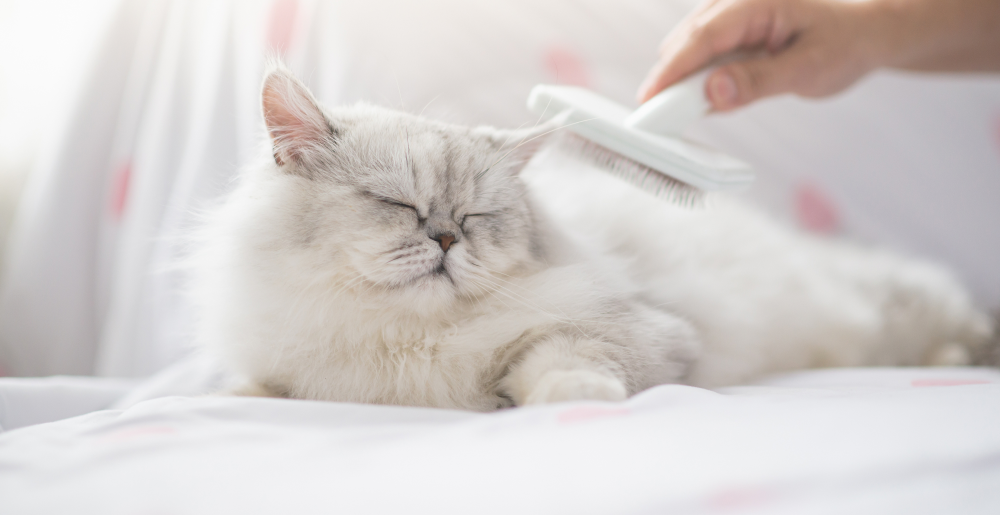


In this guide, we will see how to take care of our cats’ coat in our daily routine: when and how to brush it, how to remove mats without hurting them, when hair loss can be considered normal or when it’s better to consult your vet.
Cats groom themselves daily, and while they do it, they can swallow part of the dead hair.
When cats lick their coat, their tongue drags dead hair, dust and small residues. A part of it is eliminated naturally, but in some periods such as shedding season, or in cats with thicker coats, this amount can increase.
That’s why brushing is important. If done regularly, it can remove excess hair before it gets swallowed, avoiding formation of hairballs and tangles, and reduces the quantity of hair scattered around your house.
Therefore, this is a useful habit for their wellbeing, and it can also make your daily life together easier.
Brushing has also another perk: it’s a chance to observe your cat better. While you stroke their coat with your hand or with a brush, you can notice more sensitive areas, reddened skin, scabs, hairless spots, or general changes in their coat. It’s not about diagnosing a potential disease, but just about knowing when something has changed in your cat.
Frequency depends on the type of coat, on the period, on their age and on your cat’s tolerance and comfort.
Generally, short-haired cats require a simple routine, while medium-long and long-haired cats need more frequent brushing, because they are more prone to mats and tangles.
During shedding season, in spring or autumn, the amount of dead hair increases. In this case, stepping up your routine can be helpful.
In other periods of the year, a basic but still consistent routine can be enough. It’s also important to observe their coat: if you find a lot of dead hair or tangled areas, that is a sign that greater attention is needed.
Short hair shouldn’t suggest lack of care. Even short-haired cats lose hair, especially in shedding seasons. They can benefit from a delicate brushing session to remove dead hair and keep their coat shiny and clean.
For this type of coat, soft tools such a soft bristle brush or a grooming mitt, depending on what the cat can tolerate more. The goal is not thorough grooming, but to facilitate the natural shedding and to make it a pleasing moment.
While brushing them, paying attention to their skin is also important: reddened areas, scabs, dandruff, hairless spots are all signs that you should monitor. If they persist, you should talk to your vet.
These types of coats are more prone to tangle formation, especially in areas such as armpits, belly, inner thighs, behind their ears, tail and underbelly. These are all areas that are difficult to reach during self-grooming or where fur rubs more.
In these cases, prevention is key.
It’s much easier to remove a small tangle that has just formed than to intervene on a whole matted area. This situation could pull on their skin and hold dirt, making it painful to even move.
Therefore, brushing should be part of your daily routine. Short sessions, frequent checks and the most appropriate tools for their coat. If your cat can’t tolerate a long grooming session, divide it into several shorter ones, always respecting their signals.
If you are dealing with a kitten, keep in mind that brushing and grooming should be seen as positive experiences. You don’t need long or complete sessions: a few minutes and a gentle stroke, together with a snack as a reward if they stay calm.
The goal is to make the kitten get used to brushing and to the tools. You can leave the brush next to them, allowing them to sniff it, using it very briefly on the areas they can tolerate more, such as back or sides. If they move away, stop and try again later: insisting on it could create a negative association.
Graduality is fundamental. A kitten that learns to experience grooming time as a pleasant moment will be more cooperative as an adult, especially if they have long coats or tend to shed a lot. Each small moment counts: that’s how you build trust, without rushing.
To brush your cat correctly, always choose a moment when they appear calm. Don’t do it while they are playing or right after something agitated them.
The environment should be calm too, with no loud noises. Moreover, they should always be able to move away and feel free, not trapped.
You can start from the areas they tolerate better, which usually are sides, back, and the upper body. Proceed following the hair direction, with slow and light strokes.
Avoid pulling, pushing or insisting on the same spot too much. Brushing should be a moment of care.
Sensitive areas require more attention: cats usually don’t love being touched in their belly, armpits and inner thighs. You can slowly get closer to them, without forcing your cat and stopping as soon as you see signs of discomfort.
While brushing, these are the signs to observe: tail swishing or thumping, ears backwards, skin twitching, body stiffening, attempts to move away, hissing or biting.
When you notice these behaviours, you should interrupt the grooming session. Stopping at the right moment will help your cat maintain their trust in you, making it easier to try again in the following days.
Tools for the care of cats’ fur should be chosen according to the type of coat and to the cat’s own preferences. You don’t need many accessories: you just need to use the right ones.
Avoid makeshift tools, excessively aggressive combs or accessories. Cats’ skin is very delicate, and caring for their coat should always respect their comfort and safety.
Knots and matted hair are not the same. Knots, if caught on time, can usually be untangled with care.
Matted hair is a more compact mass of fur, which can pull on their skin, causing discomfort and hiding irritation.
The most important rule is to never use scissors near your cat’s skin. Sometimes it can be difficult to distinguish between fur and skin, especially with very thick coats, so there is a real risk of damaging it. Even though it may seem easy, improper use of scissors could cause wounds.
If the matted area is large, hard and tight against your cat’s skin, you shouldn’t take care of it at home. In these cases, ask a professional groomer or consult the vet if you notice irritations, scabs or bad odour.
To untangle a small knot, always proceed gradually and calmly. Try with your fingers first, trying to part their hair without pulling. If your cat is still calm, you can use a wide tooth comb, always starting from the hair ends and slowly moving towards the roots.
What you shouldn’t do is starting from the base of their knot and pull outwards: in this way, you will probably cause them pain and increase tension on their skin.
It’s better to proceed slowly, untangling the knot in small sections. If you notice your cat becoming tense or trying to move away, stop and try again after a while.
Short sessions can work better than a single long one. If the knot can’t be untangled and your cat won’t cooperate, stop and ask for the help of a professional. Safety always comes first.
Especially during shedding periods, cats lose their hair naturally. In this case, the shedding is evenly distributed and skin looks healthy.
Shedding is a natural process, but it can change from cat to cat, even based on their lifestyle, light conditions, temperature and coat type. Brushing helps to manage it, reducing the ingestion of hair and its diffusion in the environment.
However, sudden or local hair loss, associated with other symptoms, is different. If your cat is losing hair in an unusual way, is licking the same spot repeatedly or shows signs of skin changes, it’s important to ask your veterinarian for advice.
This kind of hair loss should be considered as a signal to monitor carefully. It can indicate that the coat or the skin is going through some changes and should be brought to the attention of the vet, especially if they appear suddenly.
You should notice where it happens and for how long, if the skin looks reddened, if the cat is licking or scratching, or if there are any other changes, such as irritability, a loss of appetite or a greater tendency to withdraw.
This information can help professionals to have a complete and precise picture. It’s better to avoid makeshift remedies or non-specific products. A cat’s skin is delicate, and wrong managing can worsen their discomfort.
If you notice hairless patches, red skin, scabs, persistent licking, together with changes in behaviour or in hair texture, it is advisable to book an appointment.
If their coat suddenly looks dull, oily, fragile or very different than usual it deserves attention, especially if your cat looks less active or eats less than usual.
The vet can help you distinguish between a natural change or a signal that requires more investigation. Providing precise information such as timing and behaviours is useful for a more complete consultancy.
For most cats, baths aren’t part of their daily routine. They keep themselves clean mostly through daily self-grooming, and with the help of an appropriate brushing routine.
However, there can be some exceptions. Cleaning them can be necessary if they get dirty and can’t clean themselves, if they come into contact with irritants, if the vet recommended it for a specific reason, or if your cat is senior, overweight or can’t reach certain areas of their body.
In these cases, it’s important to choose the right product. You shouldn’t use any shampoo or detergent for humans, as they aren’t formulated for cats’ skin and could irritate it.
If they need a complete bath, ask your vet or a professional groomer for advice, especially in case of sensitive skin or skin related problems.
You can start by brushing them, which remains the safest and easiest way, as well as part of their daily routine.
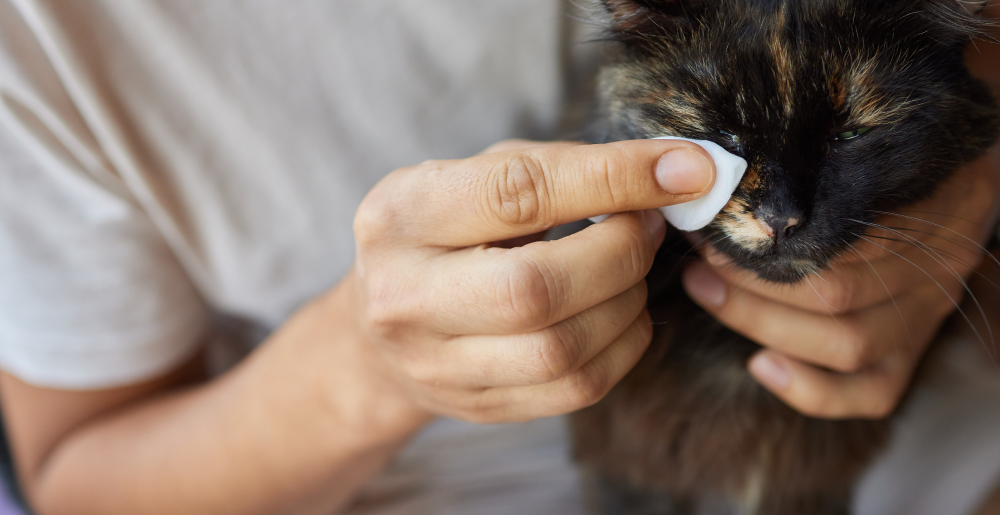
If you notice a dirty spot on their coat, you can use a slightly damp cloth and gently wipe it only on the affected area. As an alternative, you can choose specifically formulated wipes, always making sure they are appropriate for their skin and coat.
Avoid soaps, perfumes and detergents that aren’t intended for pets. Even the minimal use could cause a reaction to your cat’s skin.
If you want to avoid hairballs, you have two solutions: brushing them regularly and finding a specific diet. While brushing your cat helps reduce the quantity of hair ingested while they are grooming, a balanced nutrition with a correct amount of fibres can help the regular transit of hairballs through cat’s digestive system. In the next paragraph we will see why.
The quality and condition of a cat’s coat depend on many factors: genetics, age, health condition, environment, daily care and diet. There is no food that can prevent or solve hair loss alone, nor can it replace veterinary advice when we notice unusual signals.
However, a complete and balanced diet can support cats’ general wellbeing, including their skin and coat.
The correct intake of Omega-6 and Omega-3 fatty acids, Zinc and Vitamin E, can promote healthy skin and shiny coat.
Fibres play a key role as well: they can facilitate the transit of ingested hair, helping their organism to eliminate it through the digestive system.
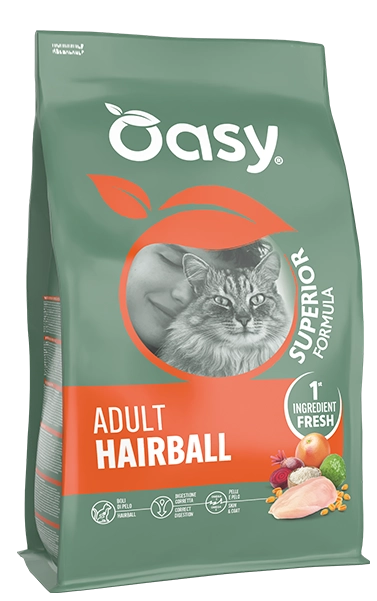
This is one of the features of Oasy Superior Formula Adult Hairball Chicken, formulated with a higher fibre content for a “dragging” effect that helps eliminating hairballs through the digestive system.
Wet food can contribute to the wellbeing of their skin and coat because they promote hydration, which is an important factor for their organism’s general wellbeing.
This doesn’t mean that wet food can replace water, which should always be available, but it can help to enrich their diet and make meals tastier. If you want to know more about hydration for cats, you can read our article hydration for cats.
A good coat care routine can be built with gentle and caring gestures. This checklist can help you.
Each week, or with a frequency that is appropriate to your cat’s coat:
To check each month:
Book an appointment with your vet if you notice:
Grooming and caring for your cat’s coat is not just a matter of appearance. It’s a way to observe them better, prevent discomforts and strengthen a relationship that is made of small daily gestures. Because Love is nurtured each day in this way too: a brush used gently, a bowl chosen with care, and a true attention to what our cats are communicating, even without words.







 websolute