

For cats, litterbox is an essential part of their routine, and their “relationship” with it is built around habits, smells and sense of safety.
When a cat stops using their litterbox, we may think they are doing it on purpose or to disobey our rules. In reality, this rarely happens.
Most of the time, they try to tell you that something in their body, in their environment or in the way the litter box is managed is no longer working. A change, even is apparently insignificant, can influence their behavior.
In this article, we will explain why this can happen, what signals to observe and how you can intervene, or when you should ask for help from a vet.
Cats can stop using their litter box for different reasons. When this happens, it shouldn’t be reduced to an educational problem: it often hides a reason that should be investigated more deeply.
The first thing to do is observe the context. Does your cat always avoid using the litter box, do they use it just to urinate? Do they get inside and exit right away? If they soil outside their box, does it happen near the box, in soft surfaces, or in very visible spots? These details can help you distinguish a physical problem from an environmental one.
Frequency matters too. A single episode can depend on the litter tray being dirty, or a sudden scare. If the behavior is continuous, it deserves more attention. Anyway, scolding them isn’t helpful: it increases stress and can worsen the negative association with the litter box.
If your cat has stopped using the litter box, the first thing you should consider is their health. Some urinary diseases can cause urgency, pain or difficulty in urinating, leading to inappropriate elimination. Gastrointestinal problems such as diarrhea, constipation or pain can lead them to avoid using their box.
In senior cats, reduced mobility or difficulty in getting inside the box are important factors. If reaching their box requires an effort, cats could choose a more accessible spot.
It is advisable to contact your vet if the change is sudden, if your cat urinates frequently but in small amounts, meows while trying to urinate, appears tired, licks its genital area persistently, or shows traces of blood in its urine or stool.
In these cases, an early intervention helps protect their health and reduce their discomfort.
Cats are very sensitive and territorial animals. A new house, a new dog or cat at home, housework, frequent guests, unusual noises or a change of routine can affect their sense of safety. An obstacle on their way to the litter tray, or another cat controlling the entrance sometimes is all it takes for them to stop using it.
In houses with multiple cats, conflicts are not always visible. Fights or hisses are not necessary: controlling the hallway or staring at the other cat while near the box can cause tensions. If cats perceive their box as an unsafe place, they could avoid using it and look for alternatives.
During transitional periods, patience and gradualness are fundamental. If their discomfort starts after moving houses or from a new arrival at home, you could follow the tips offered in our guides on How to familiarise a cat with a new home and How to introduce your new kitten to your cat: three useful tips, because safety and stability can help managing their litter box in the correct way.
Sometimes cats are not the problem, but the litter could be. A low quality and not very absorbent kind of litter could be unpleasant for cats. Many cats prefer small granules, while others tend to like plant-based materials more. However, almost every cat needs a box that is clean and easy to access.
The litter box matters too. It should be big enough for the cat to get in, turn around and dig easily. If the rims are too high, it could be uncomfortable for kittens, senior cats or cats with reduced mobility. A hooded litter box can be okay for some cats, but be too oppressive for others, especially if it traps odors. It should be chosen according to each cat’s needs and preferences. The main rule to follow is always to observe and understand what they need.
The ideal place should be calm and easily accessible. The litter box shouldn’t be placed near their bowl, nor in areas of the house that are too noisy or hard to access.
It should be a private place, but not isolated: if you put it in a closet, behind a door or in a spot where the cat could feel trapped, they may avoid using it.
Paying attention and carefully observing how our cat is behaving can help us understand what to do in case of inappropriate elimination.
Urine, stool and marking don’t indicate the same kind of problem. The place, the amount, the frequency and the chosen surface are other useful information to report to the vet.
A large amount of urine on horizontal surfaces can indicate a proper elimination outside their box.
Spraying a small amount of urine against walls, doors or furniture, are a way to mark the territory or it could be linked to stress or presence of other animals in the house. Frequency is important too: a cat that often struggles to urinate deserves immediate attention.
For stools, control their consistency, whether there is any mucus or blood, strain during their bowel movement and where they are left. If they are always next to the litter box, there could be an aversion to it, or some kind of discomfort related to that specific moment. If they are further away, your cat may be looking for an area that is perceived as safer.
It can happen because of pain, stress, urgency, aversion to litter box or to mark the territory.
To understand the real reason, you should observe whether this behavior happens suddenly and always in the same place and if other signs are visible.
If your cat gets inside their litter box, can’t urinate, meows or looks agitated, they may be feeling discomfort.
In these cases, it’s important to contact your vet: some urinary problems require quick intervention.
If they urinate next to windows, doors, new objects or in areas they share with other pets, the cause could be related to stress or to marking. Carefully cleaning the area without ammonia-based products and reducing the potential sources of stress can help to stop this behavior. At the same time, you should always make sure their litter box is clean and easily accessible.
Cats need quiet, safe and familiar places to rest, far from anything they could find annoying. That’s why, when we find them asleep inside their litter box, this could surprise us or raise some questions. The litter tray is not exactly an appropriate place to sleep in, but it could temporarily represent a safe place, also due to its familiar smell.
This is not a serious sign: it could happen during a house change, or in a recent adoption or a significant life transition. In other cases, a cat could stay inside their box to control it, especially when there’s a more dominant cat around. If this behavior persists, you should look into it.
Our advice is to help your cat find a more hygienic and comfortable place to rest, offering them better alternatives such as a sheltered bed, a box with a clean blanket, or a raised shelf. In the meantime, you should always keep the litterbox clean, to avoid the risk of skin problems.
If the kitten has just been adopted, it’s normal if they sleep inside their litterbox while adapting to their new home. It’s a familiar place for them, and it can become a safe shelter when they don’t feel at home yet. Normally, this behavior tends to stop when the kitten finds new places where they can feel safe and warm.
During this stage, it’s better to limit their access to just one room, creating a stable routine and providing them with safe hiding places. In this way, the kitten can explore the new house gradually, without feeling overwhelmed.
In senior cats, you should always consider any mobility issue or physical problem instead. If they sleep in their litter box because they struggle to move around, or because they urinate frequently or they appear disoriented, it is advisable to consult your vet.
Your cat has stopped using the litter box? The first thing to do is be patient and try to understand this behavior. Paying attention to their hygiene is important as well. Dirty spots should be cleaned carefully, with specific products that can eliminate organic smells, so to stop cats from going back and eliminating in the same spot repeatedly.
The litter box should be looked after with care as well: scoop it every day and replace the litter when necessary, wash the container regularly and avoid using aggressive detergents with strong smells, cats may not appreciate them.
If you have multiple cats, or if the box is not in an easily accessible place, adding a new box in another area can help.
Do this without punishments, scolding or forcing, because these only increase stress and discomfort. A cat’s education is based on coherence and positive reinforcement. You can consult our guide How to educate a cat: things to know, where you will learn useful methods to establish peaceful routines, respecting their feline nature.
Here’s a small checklist that can help you:
Remember that the quality of the litter you choose plays a really important role. A quality product helps your cat perceive the litter box as a clean and safe place. That’s why you should choose reliable products. In the next paragraph we will show you which ones.
Choosing the right kind of litter for your cat means respecting their preferences and making it easier to manage the litter box every day. Absorbency, odour control, size of granules, material and ease of disposal are all key factors that can help you choose.
At Oasy, we firmly believe that the love for our pets should be nurtured every day, even withchoices that can improve their wellbeing. That’s why we work every day to offer you solutions that are formulated for each need, with attention to quality and care for the habits of those living with a cat.
This daily care forms the basis of our range of cat food, and it extends to anything that can contribute to their wellbeing at home, including cat litters.
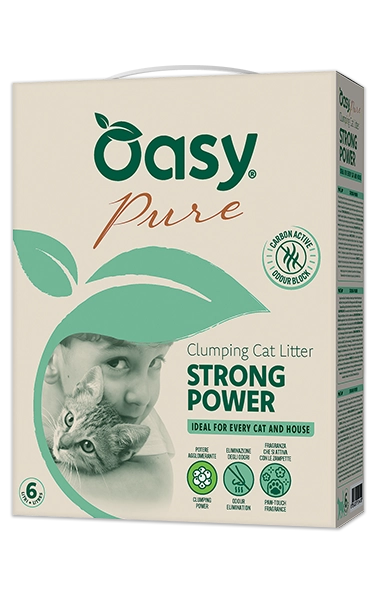
Our range of Oasy cat litters includes multiple options:
The choice depends on each cat’s preferences. If they’re sensitive to smells, they could prefer a fragrance-free clumping cat litter, while for long-haired cats, a litter with larger sized granules may be better. In a house with multiple cats, odour control, clumping power and quick cleaning become particularly important factors. A multicat litter could be perfect in this case.
To know more about what to choose, you can find more specific information in our article How to choose the right cat litter: a simple way to evaluate materials, features and habits of your cat, in order to make the right choice.
The vet could help us if our cat’s behavior changes suddenly, or if they are in pain, can’t urinate, their urine or stools show blood traces, or if they appear fatigued, with symptoms such as vomiting, diarrhea, constipation, lack of appetite, or if they keep soiling outside of their litter box despite changing the surrounding environment.
An expert could help us distinguish between physical and behavioral reasons, evaluating eventual urinary or gastrointestinal diseases, suggesting the most appropriate treatment. Reporting precise information is very useful: frequency, amount, placement, eventual changes at home and products used for their litterbox.
It’s better not to wait too long if our cat tries to urinate but can’t, or just in small amounts. This situation requires immediate intervention. Generally, every sudden change in their habits should be noticed, because cats usually communicate a disease through small daily signals.
If a cat starts avoiding their litter box, even though they used it before, there could have been a change that made the litter box less safe or less comfortable: it could be dirty, or it could be because of a change of house, or position. Noises, high-traffic spots or the arrival of a new pet at home are potential reasons. Lastly, stress and physical issues could affect them as well. If this behavior starts suddenly or is associated with pain, blood, apathy or intestinal problems, it’s better to ask your vet for advice.
It should be located in a quiet spot in the house, easily accessible and far from their food and water station. Cats should be able to find it easily, without feeling trapped or disturbed. Avoid loud or high-traffic areas, or isolated and closed rooms.
The litter should be scooped every day, even more than once a day with multiple cats, or if the litter is used very often. The complete replacement of the litter depends on the product’s indications, but the box should be washed regularly with specific detergents. A clean box helps cats feel at ease and reduces the risk of house soiling.
In a house with multiple cats, keeping several boxes is useful. Place them in different spots that are easy to access, especially in large spaces and if the cats have different habits. However, when multiple cats live together peacefully and are used to sharing spaces, they can also use the same litter box, if its dimensions are appropriate and it gets cleaned regularly.
In these cases, choosing the appropriate cat litter can make the difference: the Oasy Pure Multicat Plus litter is especially formulated for boxes that are used by multiple cats, because it helps to keep odours under control, making your daily cleaning easier. The most important rule is always to observe your cats’ behavior: if one of them starts soiling out of the litter box, it’s better to add another one in a different spot of the house.
There isn’t just one correct answer. Some cats prefer litters with neutral scent, because they have a very sensitive nose; others can tolerate delicate fragrances. The individual cat’s behaviour determines the choice: if, after switching to a new product, they avoid the litter tray, dig less or do their business elsewhere, it is best to revert to a solution they prefer and introduce new products gradually.







 websolute