

A cat’s eyes can tell much more than what we imagine. They can reveal emotions and moods, but sometimes they can also send us signals about their health. Taking care of their eyes is, in fact, not just a matter of looks. It also means protecting one of the most delicate body parts, preventing diseases that, if ignored, could compromise their wellbeing.
Eye cleaning, especially in cats that tend to produce more secretions (such as Persians or kittens in their first weeks of life) is a gesture of daily attention, simple but essential. Not every cat needs the same frequence or the same treatment, but knowing how, when and what to use can really make a difference.
At the same time, it is important to remember that eyes’ health isn’t only protected from the outside. A balanced nutrition, rich in essential nutrients, strengthens immune system and supports the mucous membrane. This reduces risk of ocular inflammation and helps keep cat’s general balance.
Eyes are one of cats' most sensitive and vulnerable body parts, they require care, attention and a certain knowledge from who takes care of their wellness every day.
This is why cleaning the eyes is a simple but fundamental gesture. It helps prevent irritation, keeping the area around the eyes clean from residues and protecting an area that, if neglected, could be subject to infections.
This is especially important in specific situations: for example, kittens during their first weeks of life; senior cats who may have a reduced ability to clean themselves; or certain breeds such as Persians, more prone to excessive discharge. However, even for healthy adult cats, intervening in the right way can make a difference.
Moreover, taking responsibility for a pet also means learning to read signals that can sometimes go unnoticed. Amongst the situations that require specific attention we can find:
Cleaning their eyes is a simple gesture, but it's still something to be done carefully. It's important to do it at the right moments and using safe products only to avoid discomforts. You just need a few tools, carefully chosen, to turn this routine into an effective and well-tolerated habit.
Sterile saline solution is always the best choice: it has no irritating component, it’s easy to find in any pharmacy and good for daily use. If saline solution isn’t available, you can use lukewarm distilled water instead, as long as it’s just an occasional alternative and not used for a prolonged period.
You should avoid hydrogen peroxide, boric acid solution or homemade cleansers as they could alter pH of the eye and cause burning or worsen inflammations.
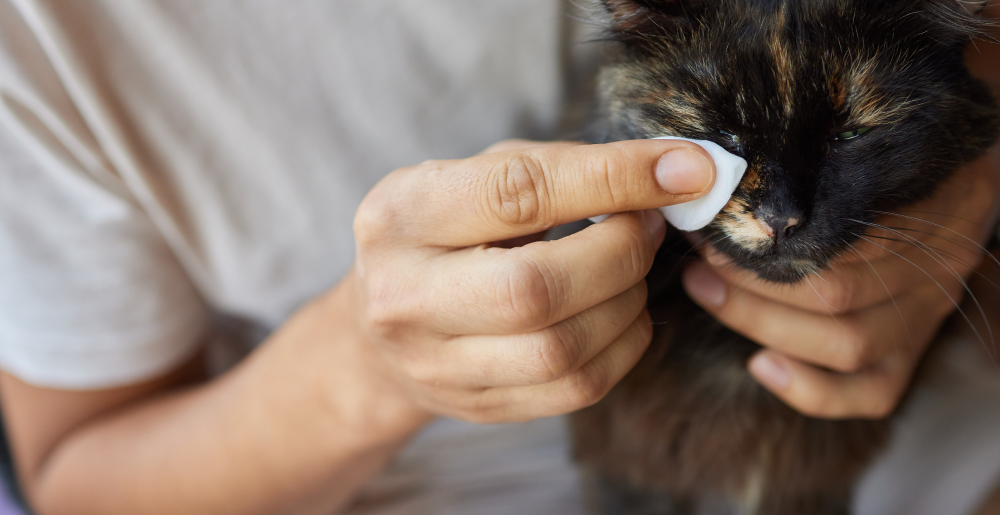
Disposable sterile gauze, soaked in saline solution, is the most suitable option. Avoid cotton pads: they may release fibres that could irritate the eye or get stuck in the lacrimal duct.
If your cat is used to human contact and to having his eyes cleaned, the procedure will be easy and well-tolerated.
Otherwise, you should proceed slowly, without forcing them and respecting their pace, gradually getting them used to this new habit. Patience is fundamental, especially with the most wary or sensitive cats. A reassuring tone, some cuddles and a delicious snack as a reward can help them perceive this as a positive experience, day after day.
Regardless of which is your case, here is how to proceed:
Even if your cat is used to it, always finish with a treat or a cuddle, this will turn the cleaning procedure into a positive moment, easier for the cat to accept.
Frequency can vary depending on the cat: some need daily cleaning, while others only occasionally. Observing them and keeping in mind your vet’s advice are the best ways to understand which one is the case.
Even if daily cleansing can be enough in most cases, some situations need extra care. Some cats are more prone to build-up, irritations or infections due to physical features or age. In these cases, cleaning must be adapted to their specific needs, and when necessary, coupled with veterinary advice.
For newborn kittens, cleaning must be done with extreme attention, using small and soft gauzes, avoiding any product that is not suitable for puppies. Excessive discharge at this moment could signal an infection or a congenital problem. Consulting your vet is always the best choice.
In case of conjunctivitis, cleaning alone is not sufficient. Symptoms such as red and swollen eyes, excessive discharge or squinted eyes require veterinary examination and a targeted treatment. Never administer human eye drops or antibiotics without prescription: they could worsen the situation.
Relying on delicate solutions or specific veterinary products is always the safest choice. Asking for advice is a gesture of responsibility and care.
Cleaning their eyes is a simple gesture, but it should be done with attention and awareness. The most common mistakes, often done with good intentions, may compromise an extremely sensitive area and aggravate small problems. So here’s a summary of the 10 things to avoid in order to protect your cat’s eyes.
We can’t take care of our cat’s eyes without thinking about what we feed them every day. Nutrition and general wellbeing of our feline friend always go together.
A complete and balanced diet, rich in Vitamin A and E, Omega-3 and Omega-6, natural antioxidants and high quality proteins supports their immune system and contributes to keeping the balance of their mucous membranes, including those in the eyes.
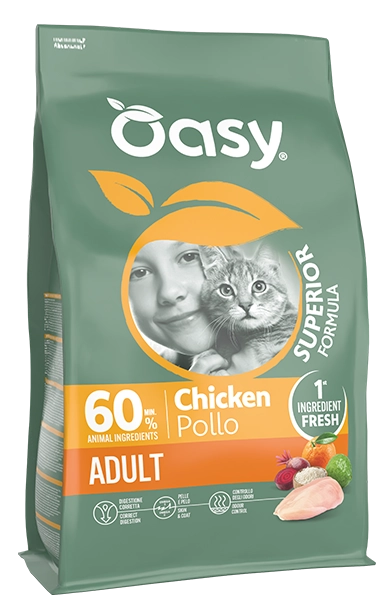
Amongst our offers, the Oasy Superior Formula range stands out for its high content of animal ingredients and for the balanced intake of functional nutrients, such as Taurine, an amino acid essential for proper heart and sight functioning. A precious help, particularly for adult and senior cats who might experience a physiological vision decline.
Choosing a carefully formulated diet means offering your cat daily protection starting from the inside and consequently reflecting on the outside as well. A good diet can’t replace proper treatment, but it definitely makes it more effective.
Do you want to know more? Read our guides to cats’ nutrition:
Guide to nutrition of kittens
Guide to nutrition of adult cats
Guide to nutrition of senior cats
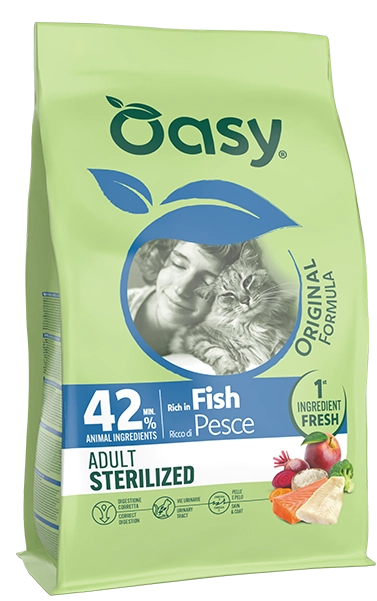
Guide to nutrition for sterilized cats
Each cat is different, also in the way they show discomforts or needs related to eye hygiene. Below we answer some of the most common questions that might arise during daily care.
Those black crusts are often residues of eye secretions, which can cause build-up once they dry. In most cases they don’t indicate any problem, but it would be better to remove them daily with a sterile gauze and saline solution. If they suddenly increase, if the color changes or other symptoms appear (reddened or half-closed eyes, excessive secretions), it is advisable to consult your vet.
It is better not to. Even if it has been recommended in the past, boric acid solution is no longer considered safe for cats’ eye hygiene. It could alter the natural eye pH and, in some cases, cause irritation. For daily cleaning, a sterile saline solution, gentle and well-tolerated, is enough.
If you notice abnormal discharge (dense and yellow or green), persistent redness, squinting or if your cat shows pain during cleaning, don’t wait to contact your vet. Even frequent rubbing with their paws or swelling can be a sign of infection or a more serious condition. In these cases, the vet only can make a proper diagnosis and indicate the correct therapy.






 websolute