Feeding your dog means supporting their daily wellbeing, day after day and year after year. As time goes by, their nutritional needs change and what was right for a younger dog may not be enough when they enter the senior phase. It is in this exact moment that diet can become a real help, especially when we talk about mobility, vitality and comfort when moving.
From the age of 7 years, many dogs start showing physiological changes which are completely natural. That’s why their joints can be more subject to daily fatigue. This doesn’t mean that the dog is not in good health, but that their organism needs more targeted and conscious care.This process doesn’t happen in the same way for each. Their size, lifestyle, individual predisposition, body weight and quality of diet can influence the way a dog does through the senior life stage. Large or extra-large breeds, for example, tend to stress joints more during daily life, while for less active dogs the risk could be excessive weight gain, which will consequently put more pressure on these structures. This is why, when we talk about dogs’ joints, we can’t separate osteoarticular health from the overall picture of their wellbeing.
Understanding how nutritional needs can change over time and why nutrition for adult dogs is different from the one for senior dogs is extremely important. Choosing the right kind of food means providing their body with targeted support, paying special attention to joints’ health, body composition and digestibility.
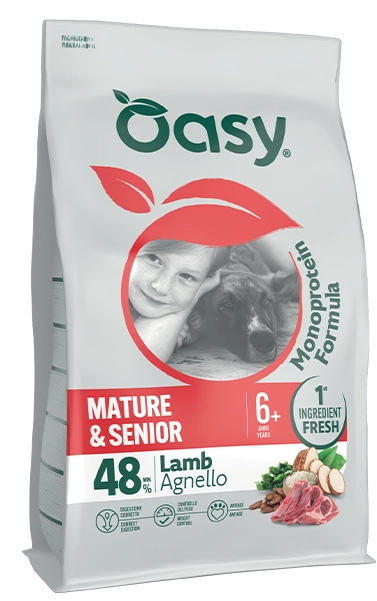
Glucosamine and chondroitin sulphate are components known for providing support to joint function and protection of the structures involved in movement. You can find them in Oasy Monoprotein Formula Mature & Senior Lamb. Glucosamine is involved in processes regarding cartilage, while chondroitin contributes to maintaining elasticity and joint tissue function. In a senior or large breed dog, where joints are particularly stressed, these nutrients can represent a precious support to their physical wellbeing.
When we talk about dogs’ joints, we tend to think only about cartilage and which specific nutrients can protect it. But muscle mass plays an essential role too.
Strong and well-maintained muscles help support the skeleton and can distribute weight more evenly, promoting more stale and safe movements. That’s why high-quality proteins, fundamental in any life stage, can be a real help for supporting joints of adult and senior dogs.
Body weight is the factor that can directly affect joint comfort. An excessive weight, even if moderate, can put strain on already fragile or naturally worn-out joints, making moving more tiring and therefore reducing the desire to be active. It is often a vicious circle: they move less because they feel heavier or more fatigued, and by moving less, they tend to gain even more weight.
In senior dogs, this aspect is even more important: metabolism gets slower, their energy needs change and an impropriate nutrition can lead to an unnecessary caloric intake. This is why weight control can’t be a secondary aspect but should be considered the main concern. In fact, protecting joints means not putting more weight on them than necessary.
Choosing the best dry food for a senior dog means finding the one which can best meet their real needs. The first aspect to consider is digestibility. As they age, their organism can become more sensible. The food recipe should be well tolerated to help digestion and effective absorption of nutrients needed for their overall wellbeing.
The second criterion should be quality of the ingredients. A good protein source, high quality ingredients and a carefully studied formula can make a difference in building a balanced nutrition. The addition of specific nutrients – such as those that can support joint health – and the lack of unnecessary additives contribute as well to make their meal essential and coherent. It is all about choosing coherently formulated recipes, where each ingredient has a specific function for nutritional balance.
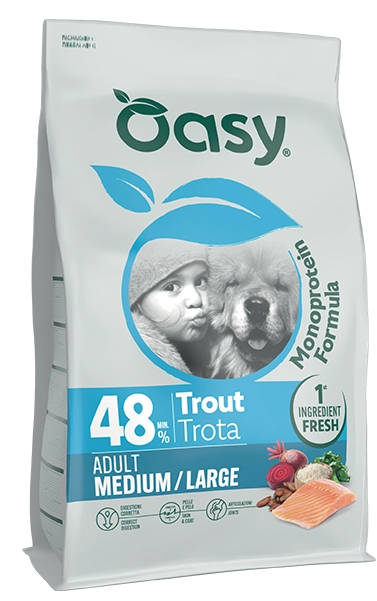
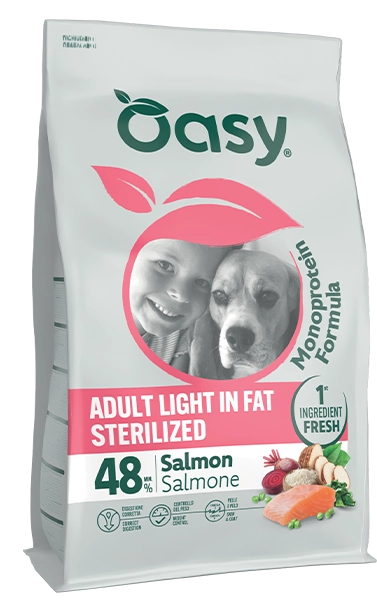
Finally, considering brands’ philosophy is another important aspect. Oasy dog ranges like Original Formula and Monoprotein Formula represent an approach that prioritizes our four-legged friends’ wellbeing, thanks to selected ingredients, balanced formulas and attention to specific needs.
In senior dogs, joint pain can often appear with progressive but easily recognizable signs: a particular stiffness after resting, difficulty getting up, slower pace, slight limping and less enthusiasm for walking, running or playing. They can also be hesitant to climb stairs, jump and might get tired sooner than usual.
In some cases, behavior can also change: the dog might be annoyed if touched or might sleep more and move less naturally because of the pain. If these signs appear often, a visit to the vet is necessary.
There isn’t a single age that applies for everyone. The start of senior life stage depends on size, breed, lifestyle and individual conditions. In general, many dogs start showing different needs when they reach the age of 7, but in large breed dogs this can also happen earlier, while for smaller breeds it could be more gradual. Rather than exclusively considering their age, observing signals is more useful: less exercise tolerance, tendency to gain weight, slower recovery times, change in muscle tone or in mobility.
Switching to kibbles for senior dogs at the right moment will help your dog enter this new life stage in time, without waiting for their discomfort to be more apparent.









 websolute