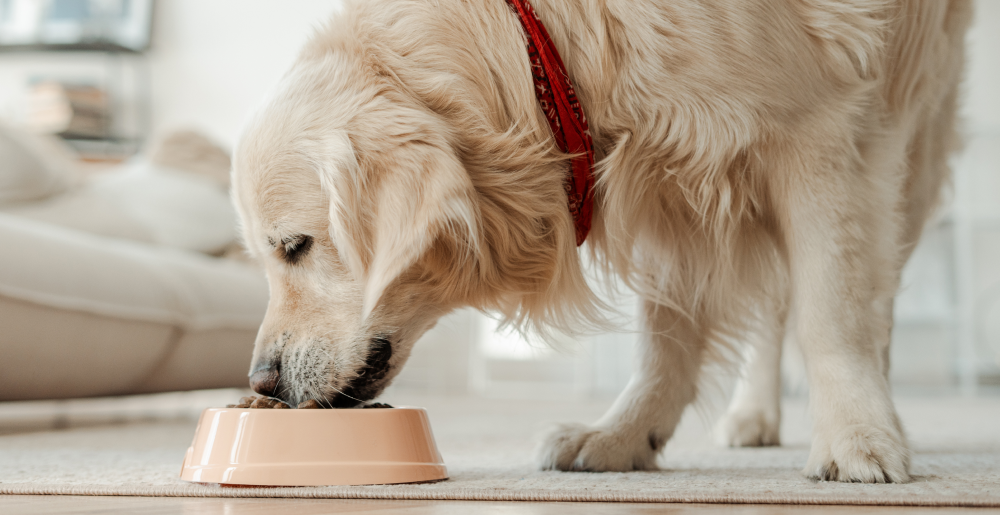
Filling our dogs’ bowl is a simple and daily habit, but have you ever thought about how, at the same time, it can affect their wellbeing? This is why deciding how much dry food we should feed them is not just a matter of grams, it also means paying attention to their lifestyle, respecting their energy requirement and supporting their health over time.
In this guide we try to understand why quantities matter, which factors can influence them and how to calculate the portions (with practical examples for dogs weighing 10 kg and 30 kg).
You will also find information on how to organize their meals, how to manage constant hunger and how to correctly combine wet and dry food.
Balance is key: choosing a complete food and measuring it according to weight, physical shape and activity. It is important to consider their age as well (we talked about this on our guides to nutrition dedicated to puppies, adult dogs and senior dogs).
As they get older, dogs’ metabolism and needs change and their diet should be modified accordingly. This is why Oasy creates recipes that are specific for each life stage, with balanced formulas that support metabolism, defenses and mobility, without overloading the organism.
The daily portion of kibbles for our dogs is never a “standard” one, but it can change depending on many factors. Here are the most important ones to consider for a balanced and tailored diet.
Puppies grow quickly: they need more energy for each kg of weight, portions to be distributed during the day and a nutritional profile that supports bone growth and development.
On the other hand, adult dogs need a nutritional intake aimed at keeping their ideal weight, always paying attention to their lifestyle (indoor/outdoor, physical activity level), while senior dogs often show a slower metabolism and changes in appetite.
Quality of ingredients (high quality proteins, balanced fats and other nutrients), as well as managing quantities, are essential aspects for all life stages. The complete (both dry and wet) Oasy Mature & Senior range is a good example: it is formulated to support them during this life stage and protect their immune system.
During pregnancy, dogs' nutritional needs increase and should be modified according to pregnancy stages. After sterilization, their activity levels and energy consumption often decrease, and it is necessary to balance the dose and to prefer complete and more satiating food. For each step, ask your vet for advice and use the nutritional guidelines on the label as reference.
As previously explained, to understand the amount of kibble you should feed your dog, you should always consider breed, shape and lifestyle. But don’t panic! You can find clear nutritional charts on every Oasy kibble bag, which can be used as reference point for a nutrition that is balanced for the dog’s needs. Moreover, in case of further doubts, you can always consult your vet.
If you are looking for an immediate prompt, here you can find two examples based on Oasy One Animal Protein’s nutritional chart. These can help you understand how to calculate the right portion.
For a small sized dog weighing around 10 kg, with a medium level of daily activity, the recommended dose is 135-160 gr per day, to divide into 2 meals. If they live inside and are calm, you should stay on the lower side of the range; while if they are quite active you can go upwards. There is one thing to keep in mind: if you add wet food during the day, don’t add it to the dry food’s portion but divide the total kcal between the two types of foods.
A meal routine is correct when it has balanced quantities, but also constancy in times. This supports correct digestion, satiety and intestinal regularity.
For adult dogs, 2 meals are generally okay (morning and evening), while for puppies you can increase to 3 or 4 in the first months, and then gradually decrease. In case of mixed feeding, dividing the daily portion into 2 meals is a good habit as well.
If you need a deeper insight on time schedules and changes based on age, you can find it all in our article: When and how many times a day should your dog eat: the Oasy guide.
First rule: don’t let those eyes tempt you. Check their physical shape and their weight. If they are too thin, talk to your vet to rule out medical causes and re-establish the food ration. If the weight is regular but they keep asking for food, it could be boredom or simply a habit. Taking some moments to play with your dog could be a solution.
Yes, and it could be a good idea to increase appetibility, hydration and satiety. You can alternate the two types (dry and wet, both complete) or mix them together. Both ways are correct. What matters is managing proportions and calculating the total calories so as not to exceed the limit.
Kibbles are practical and easy to measure with precision. Their energy density helps manage their satiety and nutritional requirements, while the right kibble size promotes regular chewing. With Oasy you can choose from complete and balanced product lines, and you can adjust portions thanks to nutritional charts available on every pack.
It’s better to avoid it: they are formulated for another animal species, with different nutrient intakes. It’s not a problem if it happens occasionally, but they can’t replace a complete food for dogs.
You should always choose food that is specific for dogs (or specific for cats) and you should adapt the portion to size, age and lifestyle, using the Oasy charts as reference point.Quantities are important, but so are quality ingredients. This is why it’s important to choose food formulated with care and attention.
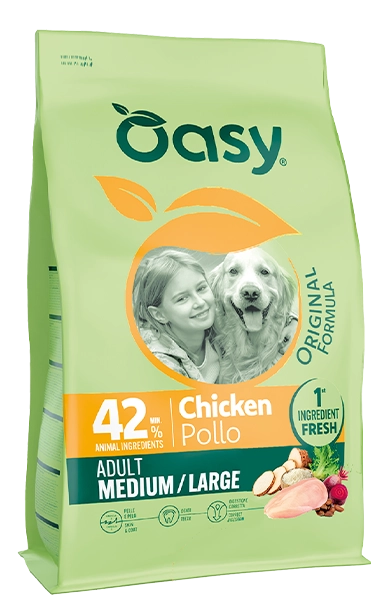
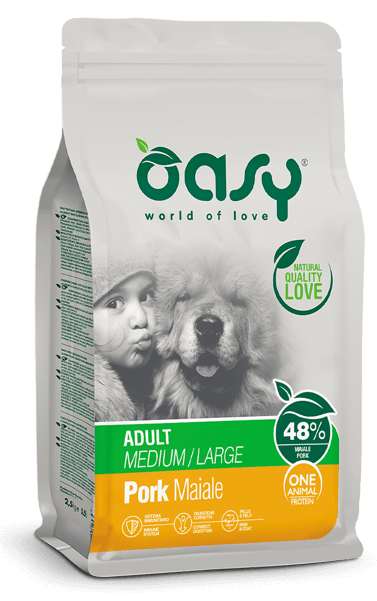
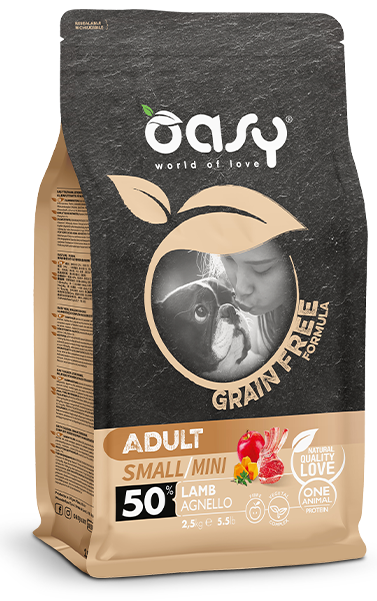
Oasy Original Formula Kibbles are formulated to offer your dog natural ingredients and a balanced intake, while the Oasy One Animal Protein is our single-protein offer, which is useful in case of sensitivities as well. Grain Free Formula is our range with no cereals, guaranteeing correct digestion. If you want to add wet food, you can search the right one from the many Oasy wet food ranges, while for treats you can always trust Oasy’s high quality snacks.
Don’t forget to always check the nutritional guidelines on the back of Oasy packs and ask your vet for advice if you want a tailored diet for your dog.
The perfect kibble portion is a balance to be adjusted day after day. Weigh the food, observe your dog (energy, stools, coat, appetite), record the weight once every 2 or 4 weeks and keep their physical shape in optimal condition. If you notice weight gain, reduce the total calories by 5 or 10%; if you notice weight loss, increase it using the same method. In senior dogs or larger breeds, adding a part of wet food could help and make chewing easier, keeping their weight under control.
Always remember to feed them with love every day. With conscious choices, quality ingredients and control of quantities, you will not only fill their bowl with food, but also with care and trust.









 websolute