Choosing the right food for dogs or cats means starting from assessing their needs: age, lifestyle, individual sensitivities, appetite and daily wellbeing.
Amongst the different formulas that are available today, grain free food represents a choice in case you’re looking for recipes without grains that are complete and created to respect your pet’s carnivorous nature.
What does grain free really mean? Does grain free also mean gluten free?
With this guide, we will try to shed some light on grain free diets for dogs and cats, answering the most recurring questions and doubts: what does it mean, how to read labels and when it can be a useful addition to the diet routine.
A grain free food is a recipe formulated without grains, which means without wheat, corn, rice, barley, oat and other ingredients that belong to this category. It’s a precise choice that offers our pets a complete nutrition without the use of grains. However, grain free doesn’t mean carb free. Grains can be replaced by other ingredients that are important to provide energy and to make the recipe more balanced. That’s why, when choosing grain free food, you should always check the full list of ingredients: their quality, the source of animal protein and the way each nutrient can promote your pet’s wellbeing. In the next paragraph we will see which carbohydrate source can be used instead.
In a grain free recipe, grains can be replaced by other sources of carbohydrates and fibres. Amongst the most common ingredients we can find potatoes, sweet potato, peas, chickpeas, tapioca, pea starch or other vegetal sources that are appropriate to the recipe. This implies that food that is formulated without grains is not necessarily poor in carbs. Carbohydrates can still be present in a significant amount, but they simply come from different ingredients. This is why reading labels is fundamental: you shouldn’t stop at the grain free claim but always read the full ingredients list.
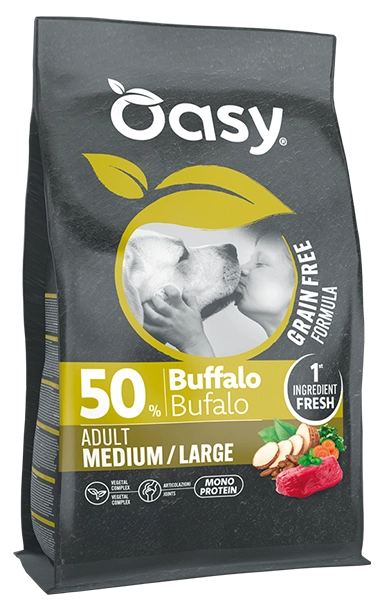
For example, in our Oasy Grain Free Buffalo for dogs, we can find fresh buffalo meat, peas, broad beans and sweet potato. The animal component is clearly specified, while the vegetal sources are replacing grains in the recipe’s formulation.
In Oasy Grain Free Formua Adult Sterilized Fish for cats, the ingredients are fresh fish, peas, potato, sweet potato and tapioca. In this case as well, the recipe doesn’t include grains but still has carbohydrates sources and fibres that are functional to the formulation.
In this case the answer is yes: grain free means gluten free. But not the contrary. Gluten free food can include grains that are naturally without gluten, while grain free food doesn’t include any kind of grain or cereal.
In our Oasy Grain Free ranges, recipes are formulated without grains and are therefore gluten free. This can be useful for pets with specific sensitivities. This choice is of course to be made with the support and the advice of a veterinarian and should always be in line with their real needs.
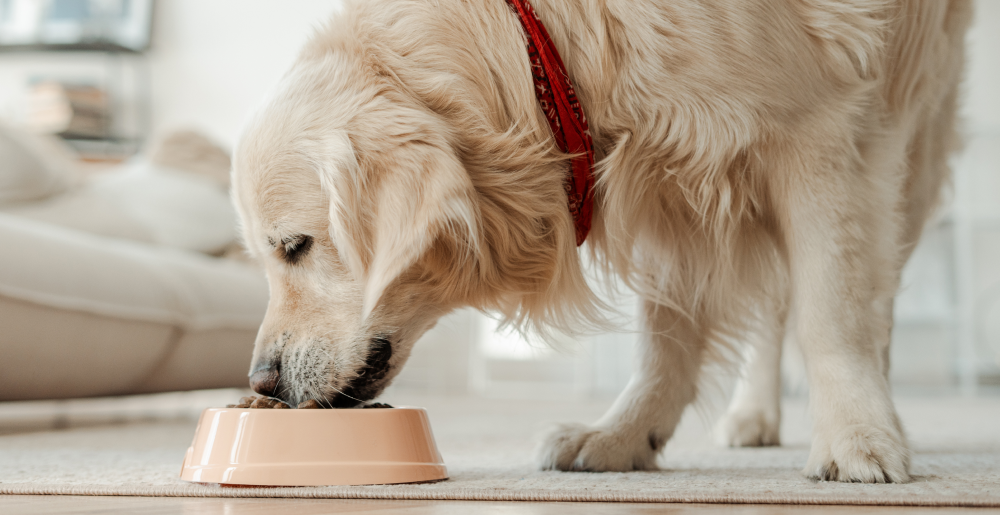
When we ask ourselves whether grains are bad for our dogs, the answer is generally no. We can’t state that grains are always bad for dogs.
In most cases, healthy dogs have no problem in digesting foods that include grains.
However, some dogs can have individual sensitivities to these types of ingredients.
If our dog is okay, stools are regular, appetite, skin, coat and energy levels are good, you shouldn’t change their diet because the food includes grains.
A grain free diet can represent a choice to diversify their daily nutrition, therefore, to satisfy our dog or cat’s individual taste. But this is not a universal rule.
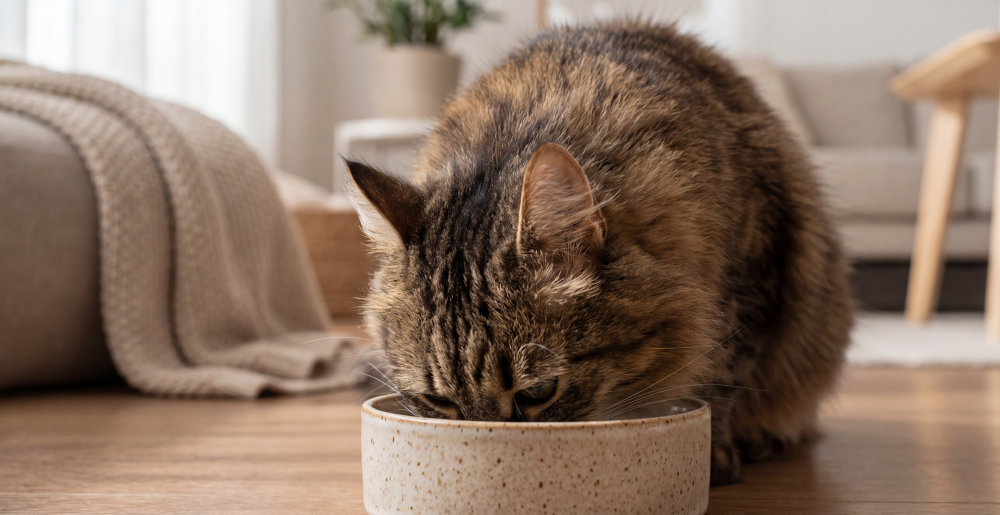
Cats are strictly carnivorous and have specific nutritional needs. They need quality animal proteins, taurine and essential amino acids.
That’s why when we are choosing food for our cats, we shouldn’t just ask if the food is grain free, but also if the recipe is complete, balanced and appropriate to their needs.
A grain free recipe is a can be an interesting choice to offer our cats, and it can be ideal for cats with food sensitivities, but you should also consider their general conditions.
In fact, for cats as well there isn’t a universally valid answer: the right choice comes from balance between their nature, habits, preferences and quality of their diet.
A grain free diet can be useful in certain cases but should always be considered as a possibility and not as an automatic solution.
The first case is about individual sensitivities to a specific kind of grain, especially when they are assessed with the help of a veterinarian.
In this situation, choosing a grain free recipe can help to simplify our pet’s diet, being able to observe their reaction to problems such as itching, irritations or other skin related issues, which are often caused by food intolerances (as we explain in the article “Why do dogs scratch? Causes, symptoms and remedies for dermatitis”).
The choice of a grain free diet can also be driven by palatability and variety. Some cats or dogs particularly enjoy recipes with different flavours. In these cases, choosing a food that is formulated without grains can be a way to diversify their daily diet, always respecting their nutritional needs and introducing them gradually.
Grain Free nutrition is not necessary for all pets. If a cat or a dog is healthy, can digest their food correctly, looks vital and doesn’t show signs of intolerance, there is no reason to change their diet. The inclusion or exclusion of grains is not enough to determine a product’s quality.
There is another point that should be clarified: a grain free product must not be considered as a light or dietary food. Weight management depends on calories, daily amounts, activity levels, age, sterilisation and medical condition.
If your goal is keeping your pet’s weight under control, you should choose an appropriate recipe (for example, Oasy Superior Formula Adult Light in Fat for cats, or
Oasy Monoprotein Formula Adult Light in Fat Sterilized Salmon for dogs).
If a grain free food isn’t strictly necessary, it can always be a quality choice to diversify your pet’s diet, improving palatability or satisfy their preferences. The main rule is just one: listen and observe your pet.
Labels are the first useful tool to make a conscious choice. A “made without grains” claim is showing you just a part of the whole formulation. Here is some information on how to understand the label of a dry grain free product.
Would you like to know more about cat’s or adult dog’s dietary needs? You can read our Guide to Feeding Adult Cats and the Guide to Feeding Adult Dogs.
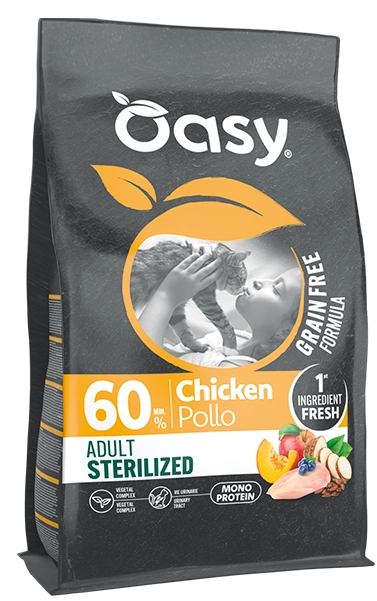
Oasy Grain Free Formula kibbles for dogs and Oasy Grain Free Formula kibbles for cats are all prepared without grains and without gluten, with a single source of animal proteins.
For dogs, recipes contain a high quantity of meat or fish (50%), and the first animal ingredient is always fresh. They are formulated for different breeds of puppies or adults and can be ideal for sensitive subjects.
For cats, Oasy offers grain free products with minimum 60% from a single animal protein source, to respect their carnivorous nature and provide a complete and balanced nutrition. In this case as well, the range includes products for kittens and sterilized adult cats, which are suitable to cats with sensitivities as well.
The main difference is about the inclusion of grains in the recipe. A grain free food is formulated without grains and uses different carbohydrate sources, such as potatoes, peas or tapioca. A low grain food, on the other hand, includes a reduced quantity of grains, which are selected for the recipe’s nutritional balance.
Cats are strictly carnivorous and need a complete nutritional intake, with quality animal proteins and specific nutrients such as taurine. This can be obtained both with grain free recipes and recipes containing grains, provided they are complete and well-formulated.
No, grain free food is not a dietary product. Weight control depends on other factors such as the energy intake, daily amount, physical activity, age, sterilisation and health conditions. If a dog or a cat needs to lose weight, it’s best to ask your vet for advice, and choose the best solution with them.
They meet different needs. Grain free indicates without grains, while single protein means formulated with a single source of animal proteins. The two features can also be together, like in Oasy Grain Free Formula. The choice depends on the individual pet, on their needs and on their overall dietary habits.
Choosing a product for our dog or cat means understanding what their real needs are. Age, size, lifestyle, appetite, individual sensitivities and health conditions are all factors that can help you decide which food can support them each day.
A grain free product can be a great choice if it combines no grains with high quality animal ingredients, a complete formula and good tolerability. For some pets it can be the answer to specific needs, for others just a way to diversify their diet with a palatable recipe.
At Oasy, helping you nurturing the Love is about offering you carefully formulated recipes, paying attention to what makes every dog and cat unique. Because their wellbeing comes from a balanced and well-established routine, bowl by bowl.







 websolute